A personal flight on a shared screen.
The person in 30A wants the crew to know them. The stranger in 30B doesn’t need to. Delta wanted more content partners in the cabin, and I led the team working out what that should mean for the passenger: seatback, phone and crew concepts connected around the person in the seat.
Creative Director
Delta · 2024–2025
2 senior art directors
1 senior motion designer
1 senior UX director
CES 2025 concept
Know me
I wanted the care you get as a regular at a good restaurant: people know your name, recognize your preferences and act on them without you having to ask. We wanted to extend that feeling to everyone on the plane.
The seatback welcome could acknowledge status and loyalty. The crew view made that recognition useful for service, showing seat-level preferences and dietary information so employees could respond to the person in the seat.
Seatback · what the seat knows

Crew tablet · what the crew can do with it

Ask me how I want to fly
Knowing someone’s status didn’t tell us what kind of flight they wanted that day. Standard, Focus, Vacation and Wellness modes changed the emphasis across entertainment, distractions and rest. Earlier preference studies also offered a way to decline personalization.
Planning made those choices specific. Passengers could plan rest, ask not to be woken, and review meal and drink service. Their choices were intended to help employees respond during the flight. These were concepts for how the connected service could work.


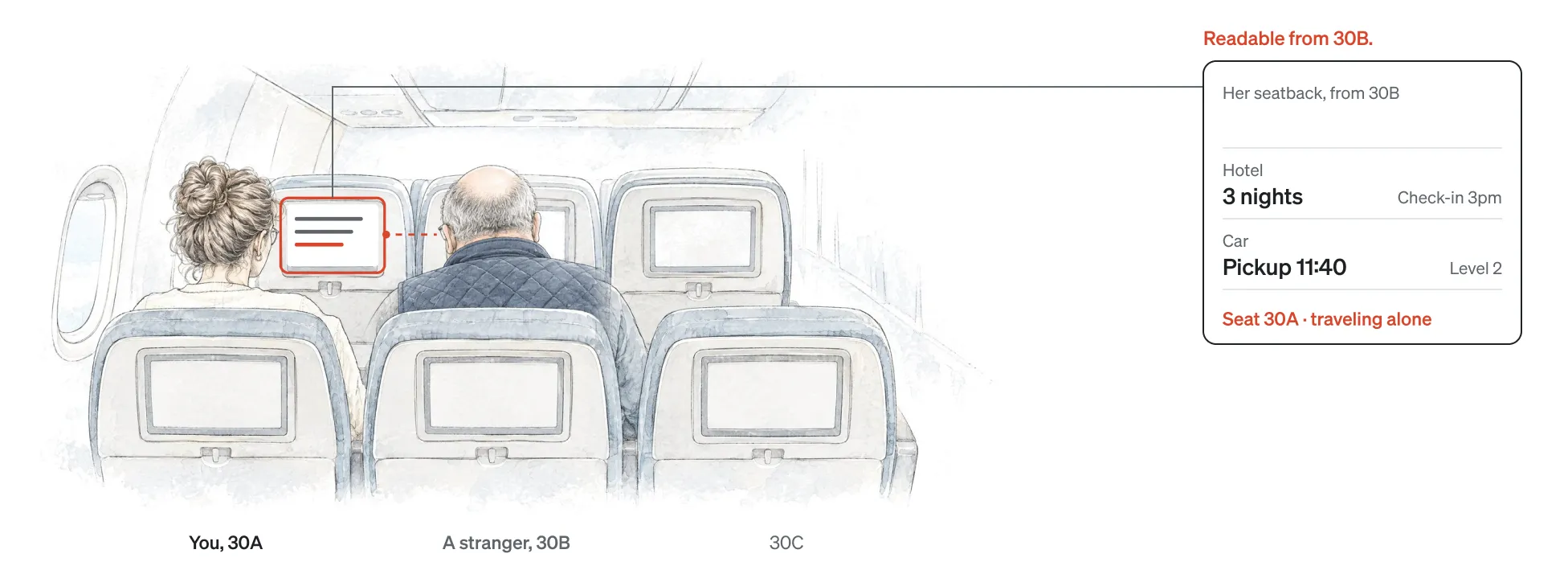
Not on the screen beside you

Typing to the assistant happens on her phone.
We explored showing hotel, car-rental and transport bookings on the seatback. That brought the wider trip into the cabin, but exposed someone’s onward plans to the passenger beside them. We were particularly concerned about that exposure for women traveling.
We pulled back. Detailed disruption information belonged on the passenger’s own phone. The seatback could offer help and direct the next step to Fly Delta without exposing their plans.
The same boundary shaped the assistant. We limited it to flight-relevant needs and kept text entry on the phone, both for privacy and because typing on a seatback is awkward.
Input stays private.
Typing to the assistant happens on her phone.

The concept was shown at CES in January 2025. Delta’s internal teams took the roadmap into production; the screens here remain the concepts we developed beforehand.
I would work more closely with the strategy lead if I ran this again. She was making the case for partners and the revenue that could fund new interactions. I was trying to protect the passenger’s point of view. Those choices needed an honest tradeoff conversation, and I should have made space for it.