Room to grow into.
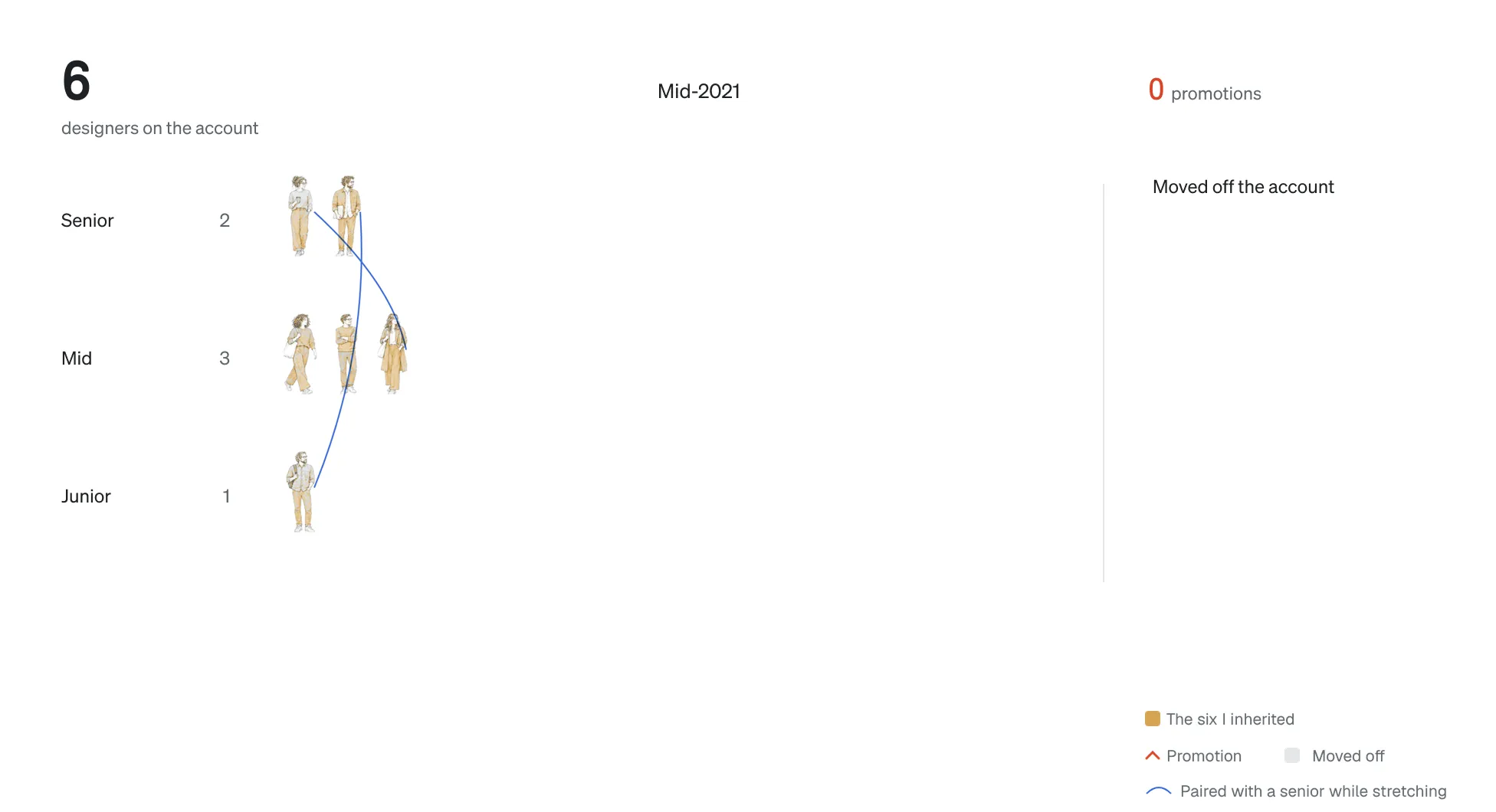
When I took over our Delta design team in mid-2021, we were six: two seniors, three mids and one junior. I had grown up inside a room somebody else made. Now the room was mine to make. As the team grew, I wanted the people already there to have room to progress. That meant giving them more responsibility and building the support to help them use it.
Creative Director
AKQA · 2021–today
Delta account
Team: 6 → 23 → 18
Leave room, then stay close
Six became twenty-three in two years. I hired more juniors and mids than seniors, staffing below the seniority the work seemed to ask for. Filling every senior role from outside would have left fewer opportunities for the people already doing the work.
Anyone taking on work beyond their title had a senior paired with them. I checked in through regular one-to-ones, joined working sessions to pressure-test the thinking and helped people prepare their talking points. In client meetings I was there to back them up. The extra responsibility came with someone to lean on.
Rehearse before the presentation
Support on individual projects helped, but designers were still working in silos. In 2021 I started a weekly pin-up so they could see one another’s work and get comfortable talking about it before a client presentation.
In 2023, we started calling it the Table Read, after the theater practice of reading a script together before performing it. There is no deck or polished walkthrough. Someone from each project brings the working board as it stands and frames the ask, the problem and how we’ll know whether it worked.
There isn’t one moment that sticks out, but it has been a pretty effective way to help shyer, less vocal designers become comfortable speaking in front of larger groups. I’ve seen that carry into client presentations and regional town halls.
The team later built a Table Read template, onboarding guidance and structured Figma files. New people could find their way through the account and join the practices already there. The support became less dependent on the conversations that started it.

-
1What is the ask?
The brief card the project brings to the table
-
2What is the problem?
The part of the board that isn’t working yet
-
3How will we know it worked?
The measure the work will be judged against
Growth had a cost
My miscalculation was thinking the team would stay as passionate about the problem as we were through the pandemic. When the pressure turned down, the adrenaline went with it, and that revealed a lot of burnout. By 2026, all of the original six had moved off the account, and a new group had joined.
The room for growth remained. Promotions kept coming, and several people earned two of them. Asking mids to take on more responsibility also pushed them to grow faster than they otherwise would have. I would make the call again, with a clearer understanding of that cost.
As Delta grew its internal design team, our scope narrowed and the team now stands at eighteen. Not everyone who moved off the account moved by choice. The rituals and tooling stayed, but the opportunities changed. In 2026 we moved to squads, giving people deeper subject expertise with less of the variety the flexible years offered.
It’s still too early to know whether we got that trade right. We have retooled this account before.
6
Mid-2021 · the team I inherited

23
Mid-2023 · peak
18
2026 · scope has narrowed